DTW 14: Art
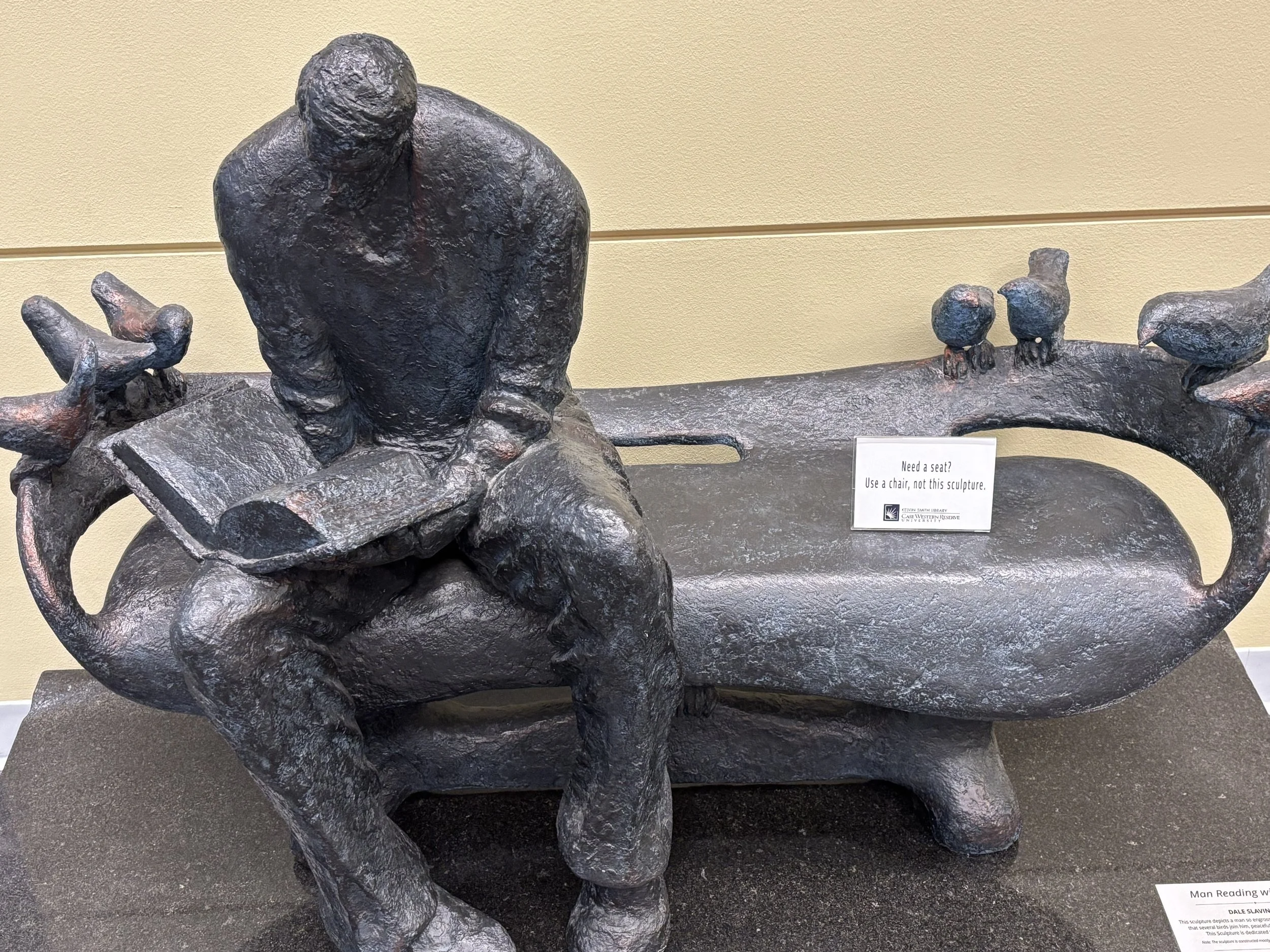
A statue depicting a man sitting on a bench at Case Western Reserve University library
Design in the World is a series of interesting moments and reflections on how design has an impact on making the world easier or harder to navigate.
Art and Design compliment one another, but are not the same.
One of the earliest lessons I learned from design is the difference between Art and Design. The two share a lot in common in that they are both a creative act. Art has always seemed to me as something that isn’t necessarily created for a specific purpose or reason, it’s more a form of creative expression from the creator’s soul. Sometimes art gets commissioned, such as Michaelangelo’s Sistine Chapel painting. In this case the artist is creating for someone else for a specific purpose- and that’s where Art starts to veer into Design. My personal definition of design is “solving problems at ever-increasing levels of fidelity”. The professional designer’s role is to create something for someone else, and at that point it becomes less art and more science. There is an artistic quality to design in that designers do have the opportunity to inject their personal style into what they create. My friend Gabe Puerto (Yellow Lime Design / Alquemy) is an industrial designer who has certainly developed his own style in creating functional and aesthetic home goods. Digital designers definitely give things their own personal touch sometimes. There is a careful balance that needs to be struck. In design there is an old saying that “Form ever follows function” coined by architect Louis Sullivan, the core idea being that the design, structure, and layout must serve the practical use first, leaving out fake or unneeded decoration. Design and Art are both intentional acts (design moreso than art), but the intent of design is almost always functional, where art is often creative expression.
While in business school I would often do homework and work out of the library. It’s a beautiful library with three floors, dedicated study areas, and many art installations to inspire people. I couldn’t help but notice a stone bench with a statue sitting on it. There was a sign on the bench asking people not to sit on it, but the design of the bench begged to be seated on. There was an open space after all- who else to fill it but a human? All that said, the sculpture is a piece of art that is made to be admired, not a bench, which is functional and made to be seated upon. The form and function of the artwork conflict- is it a bench, or a piece of art? Both? The sign on the bench alone tells you that despite your best intentions, it should not be seated upon, emphasizing the issue here: It’s not a functional bench even though it looks like one.
As designers we are expected to have “taste”. It’s an important word that is similar to an artist’s “art style”. We are expected to understand the right pattern for the right behavior, and how to present it to the customer in a way that’s easy to understand, let alone delightful to interact with. Companies like Teenage Engineering and designers like Jony Ive have excellent taste, in that the things they design are both functional and nice to look at. Don Norman’s book Emotional Design really lays into this concept, constantly referencing products by the brand “Alessi” which inject aesthetics and delight into functional goods. I will say that I had a terrible experience with their Teo product, which is a little person holding a tea diffuser which you place on the rim of your mug. The little thing consistently dropped a basket of loose-leaf tea into my mug with a big grin on its face, so now it’s just a decoration. The form outweighed the function. So can designers be artists, and vice-versa? Yes. Are they the same thing? No. Design is almost always for someone else other than the designer, a process that is often bound by creative constraints outside of the designer’s control. Art is more liberating, and allows the person to create and express themselves with all of the tools available to them.
#CertifiedOrganic