Iteration
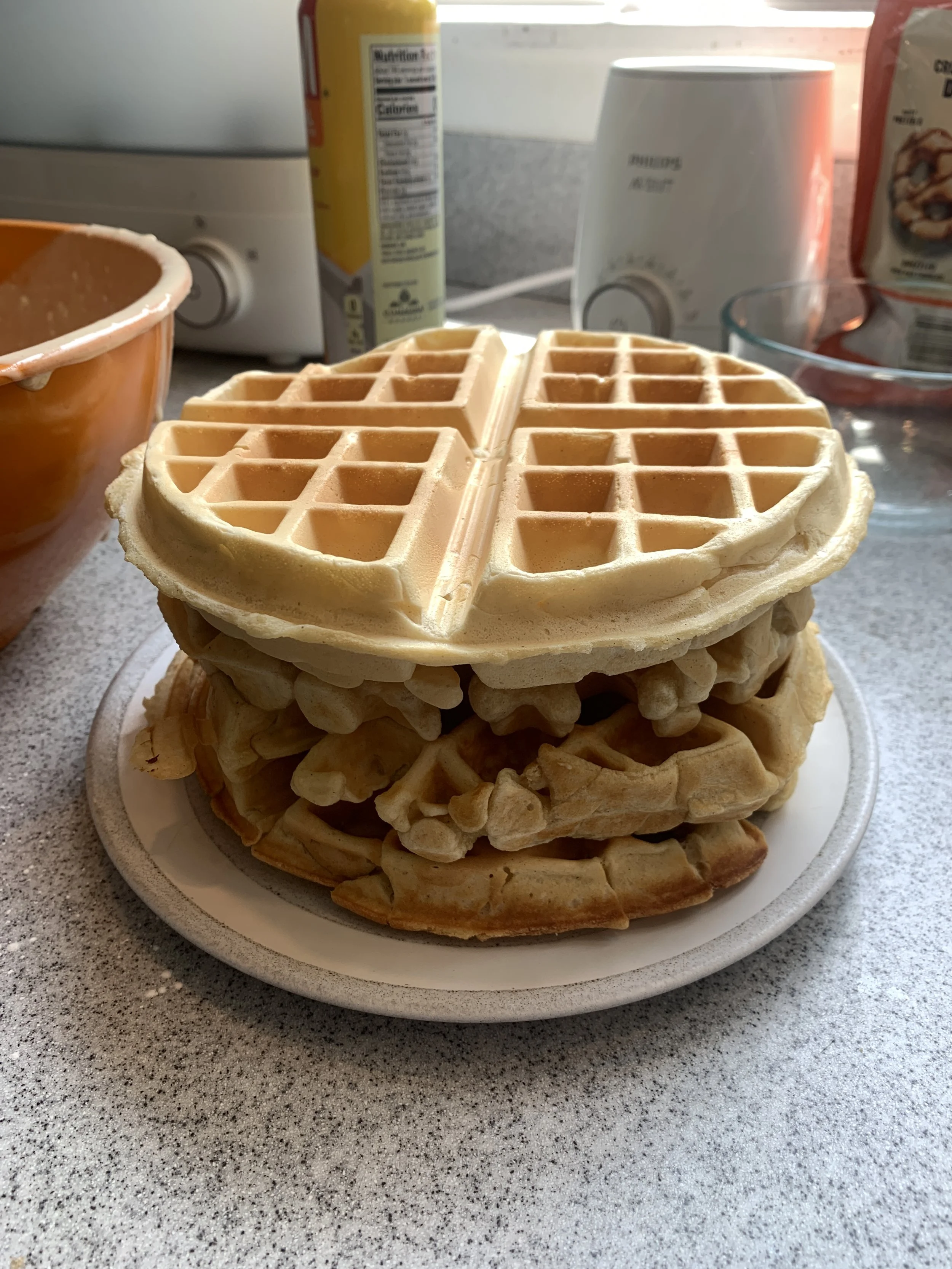
A stack of Belgian waffles with a not-so-good waffle on the bottom and a crisp light and fluffy waffle on the top
Design in the World is a series of interesting moments and reflections on how design has an impact on making the world easier or harder to navigate.
Keep iterating
When we approach a problem- (yes I still use the dash and no that is not AI) - it’s easy to jump to what the solution to that problem should be. For every solution we put in front of a client we have many iterations scattered across Figma and Miro files or foam core boards with multicolored clusters of Post-Its. There were iterations at different levels of abstraction from words to polished prototypes. It felt like the more we iterated the more we learned. The learning that took place between iterations would be critical to informing future design decisions.
On Saturday mornings we like to make Belgian waffles. Making waffles is a repetitive process, and one things that has been consistent is that the output of the first repetition is soggy or a mess of batter, not on the iron long enough, or the consistency of the batter is just not there. When one batch doesn’t go so well, we learned things like “Use baking powder not soda”. Each iteration leads up to a better waffle by the end.
At the end of the waffle-making process we learn and improve and then make a better batch of waffles. We can master the process over time or pick up techniques for making better waffles. Over time we end up with a “perfect” batch. As designers we have a responsibility to iterate and explore possible recipes and changes to systems before committing to one approach. Making waffles is easy relative to solving large and complicated organizational issues. I’m still on the journey to the light, slightly-crispy, air of a perfectly cooked waffle.
#CertifiedOrganic