Human-Centered Design for Dogs
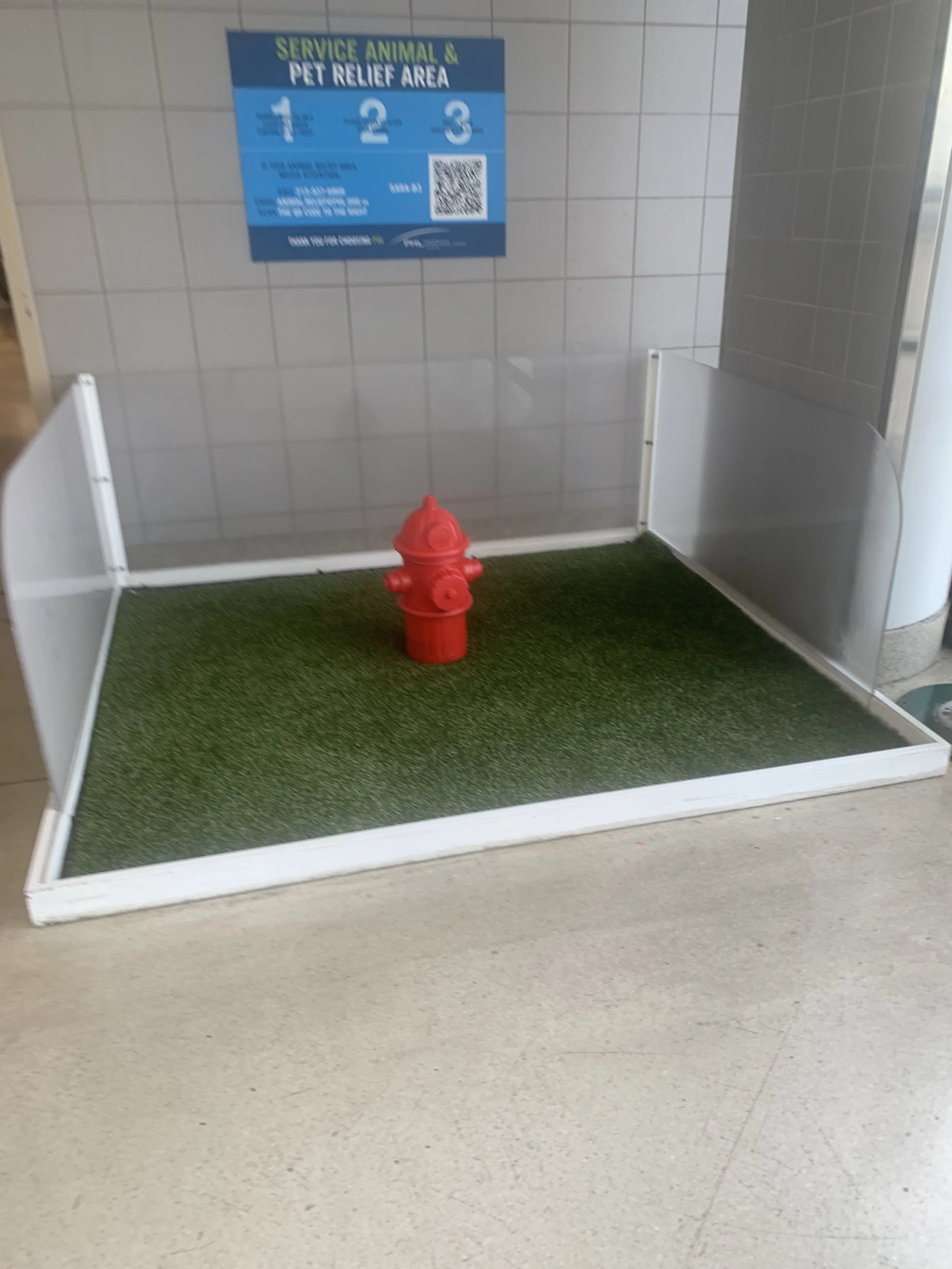
Image taken of a fire hydrant on astroturf in an airport to give dogs a somewhat familiar place to relieve
Design in the World is a series of interesting moments and reflections on how design has an impact on making the world easier or harder to navigate.
Interactions and representations guide how we use things
Sometimes a good design decision can be so obvious by observing patterns in nature. There are so many behaviors that simply go unrecognized because they are a force of habit. It’s easy to get frustrated when an expected pattern doesn’t quite line up with an actual pattern. Humans have an expectation for things to work the way they expect, and getting to that point requires a human building a shared understanding of the thing. Cliff Kuang of “User friendly: how the hidden rules of design are changing the way we live, work, and play” said something to the tune of, “people have conversations with things, not through words, but with interactions.” The first rule of behavioral design is to make any action you want users to take easy, a second rule is to make that interaction fun as well. But what about dogs?
Many airports have places for dogs to do their business. One in particular was represented with a red plastic fire hydrant on top of a bed of green astroturf. The fire hydrant was obviously fake (maybe for good reason) and it was surrounded by a barrier to direct traffic around it one could suppose. Either way this thing was planted in a busy airport with a lot of foot traffic. So for a dog, I imagine it’s fairly obvious how they were supposed to interact with it. For their owner, probably the same. For the airport, that thing was contributing to less waste produced within the airport itself. Sometimes design like this is just so obvious. It’s not elegant or sleek or necessarily sophisticated, it’s just really easy to understand and use.
In “Computer’s as Theatre”, Brenda Laurel wrote “Interaction should be couched within the context of the representation”. What Laurel was referring to was that the things we design can be thought of as stages for people to act on. As designers we set the stage. Sure, we can feed a cast a script and have the rehearse lines, but ultimately it is our script and our stage. Introducing unnecessary complexity to that stage can lead to broken props, upset cast members, and all sorts of messes. Alternatively, designing things meaningfully can help the cast members as they perform leading to delight and perhaps a desire to keep performing on that stage.