Decision Support
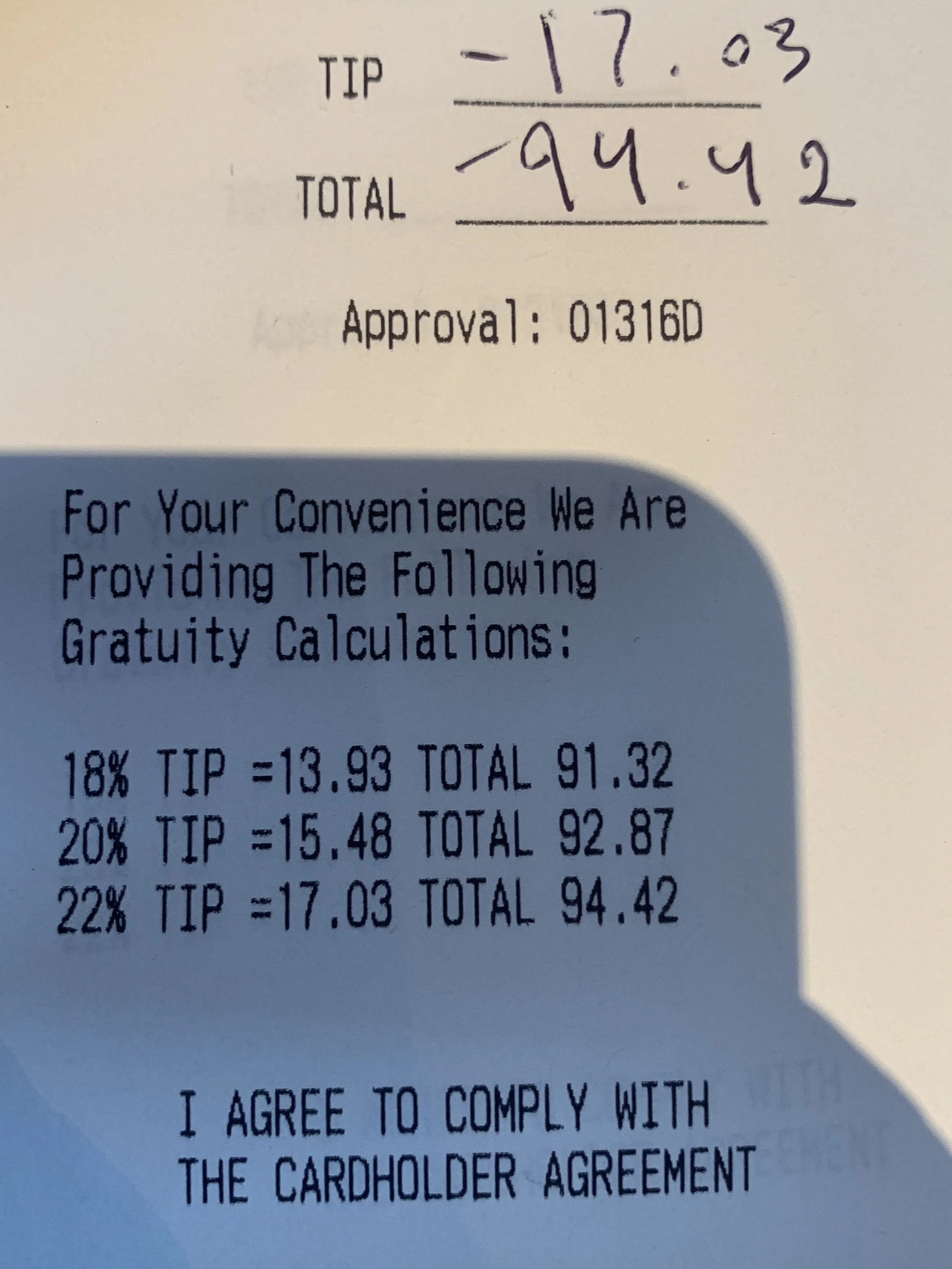
Image taken of a restaurant receipt with a selection of tip options
Design in the World is a series of interesting moments and reflections on how design has an impact on making the world easier or harder to navigate.
Helping customers make decisions can have real benefits
Making decisions can be hard. There’s a whole field dedicated to it which is economics- the study of how people make decisions under constraints. People can be anyone from your customers, end users of a product, business. leaders, or anyone else who is struggling to make a decision. As you might imagine, they could be struggling with a decision about where to invest their resources such as time or money. Constraints might include financial, time, or other things which they have a limited resource of. All of these variables will result in an outcome. Many people opt for the path of least resistance - which path will create for me the most painless experience to accomplish my goals? Others might satisfice- I am willing to accept a small amount of pain to avoid much larger pain of searching for the best possible option. We all make decisions every day- what to eat, what to do, whom to spend our time with, etc.
We were sitting down at a restaurant and upon receiving a receipt for our stay were given a receipt. The receipt had everything you would expect- a field for a tip, total, and signature. For anyone who has ever struggled with figuring out what to leave as a tip, the receipt also included a tip calculator to make it very easy to calculate a tip. What I found interesting about this restaurant was that rather than the usual 15%/20%/25% tip bands that some might call conventional, this receipt included 18%/20%/22%. If I had to guess why, it’s to constrain the options available to the customers so that the server would at least get an 18% tip, which is significantly more than 15% depending on the bill. Granted the 25% is removed as well, so the server would be less likely to achieve that level of tip. As a customer I am usually evaluting my experience and spending time fumbling with a tip depending on the level of service I got. In this case it made it very easy to select an option- of which I selected 22%. It’s not 25% which I usually reserve for special occasions, but 22% still felt like a good fit. In the end, the server got the highest tip on the list.
Designers have a responsibility to make it easier for customers, end users, etc. to make decisions. We call these Decision Support Systems (DSS). Whether it’s choosing the right insurance package, the right meal plan, or the right way to allocate your investments portfolio, digital systems have the powerful means of alleviating the work of crunching numbers and parsing information and giving people a consolidated set of options with a set of trade-offs. Without this information it would be difficult for people to make a decision which can have a big impact on conversion. When people struggle to make a decision, it consumes mental resources and time, both of which are limited. Businesses need to walk a fine line though. Like the receipt example above, the restaurant still provides me with a mean of entering my own value, or not leaving a tip at all. You want to provide a DDS that helps alleviate the work of making a decision while still respecting the customer’s agency to make their own decisions.